On this page
- How we picked
- What changed in photo restoration in 2025 and 2026
- The subscription-versus-one-time divide is the real story
- Why a specialist tool tends to win on old photos
- How we tested
- Quick comparison
- The ranking
- 1. RestorePhotosApp
- 2. Remini
- 3. MyHeritage In Color
- 4. VanceAI
- 5. Hotpot.ai
- 6. Adobe Photoshop (with Neural Filters)
- 7. GFPGAN / CodeFormer (open source)
- Bottom line
- FAQ
How we picked the best photo restoration apps
Old family photos are irreplaceable. When you are trusting an AI tool to restore the only surviving photo of your grandparents' wedding, "good enough" is not good enough. You want a tool that produces natural, faithful results without obviously over-processing faces or inventing details that were not there.
For this 2026 ranking, we focused on tools that specifically handle the unique problems of old photos: fading, scratches, color loss, blur from age, severe damage, and the texture of aged photographic prints. We tested the free tiers, looked at pricing transparency, and evaluated how confidently each tool handles the specific job of restoring vintage family photos.
We have a clear bias to disclose: RestorePhotosApp is our tool, and we ranked it first. We did try to be honest about where competitors are stronger. Remini is genuinely better for modern selfie enhancement, MyHeritage is excellent if you are already deep in genealogy, and Photoshop is unbeatable if you have the skills and time. The ranking below reflects what we believe is the best fit for most people restoring old family photos at home.
What changed in photo restoration in 2025 and 2026
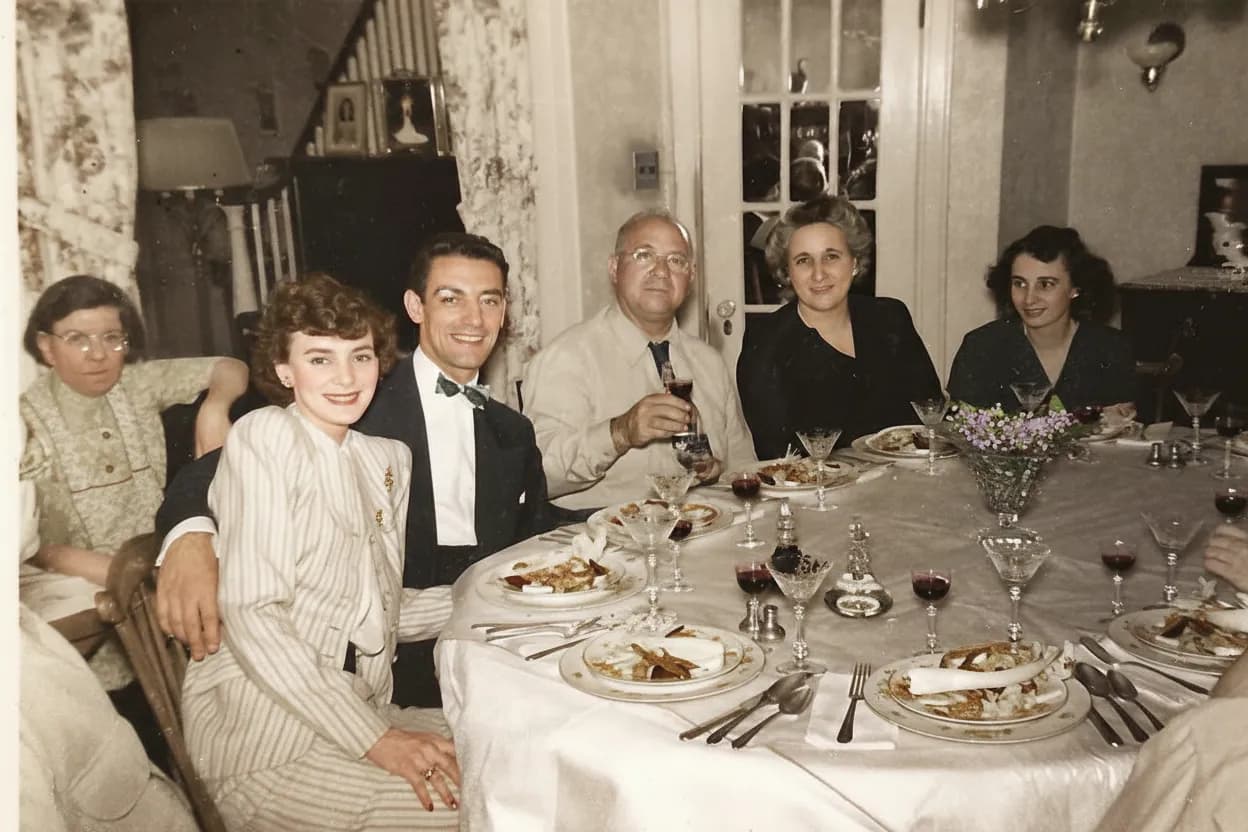
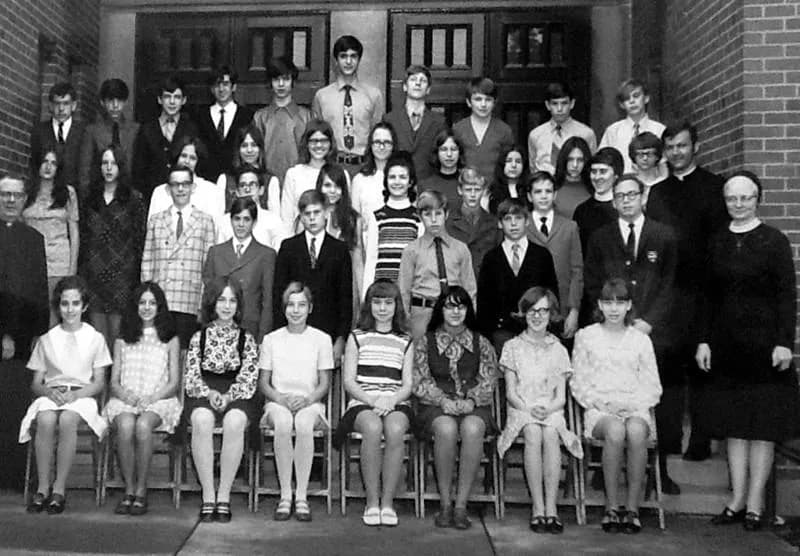
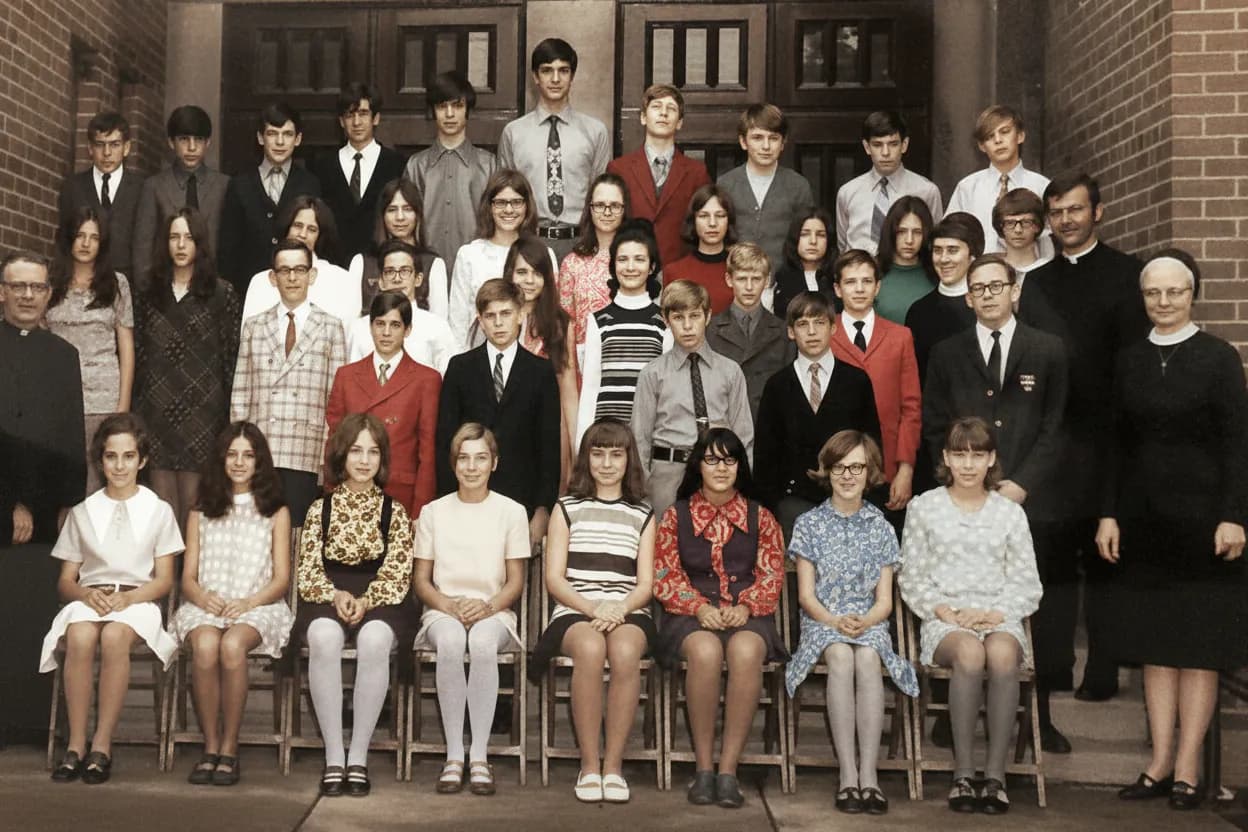
Photo restoration has been one of the quietest revolutions in consumer AI. Five years ago, restoring an old family photo meant either learning Photoshop, paying a specialist studio anywhere from $30 to $150 per image, or accepting that the photo was simply going to keep fading. The free or cheap automated tools that existed produced unsettling results: overly smoothed faces, plastic skin, hallucinated features, color bleeding into the wrong areas. They were impressive demos but rarely something you would actually print and frame.
Two things changed that. First, the underlying face-restoration models (GFPGAN, CodeFormer, and the next generation of diffusion-based restorers) got dramatically better at preserving the actual identity of the person in the photo rather than averaging them toward a generic face. Second, the colorization and inpainting models that handle the surrounding scene learned to respect the original photograph instead of creatively reinterpreting it. The combination means that for the first time, a typical home user can drop a damaged old photo into a web app and get back something that genuinely looks like a careful manual restoration.
The result is that the question is no longer whether AI photo restoration is "good enough" for family photos. For most photos, it clearly is. The question now is which tool to use, and how much you should reasonably pay. That is what this ranking tries to answer. The differences between the top tools are no longer mostly about quality (the top three or four are all very close on quality) but about price model, free tier honesty, and whether the tool was built for the specific job of restoring old photos or whether restoration is a side feature in a broader product.
The subscription-versus-one-time divide is the real story
If you spend any time looking at photo restoration tools, you will notice that they fall into two very different camps. One camp uses recurring subscriptions: weekly, monthly, or annual fees that keep charging whether you use the tool or not. The other camp uses one-time credit packs: you pay once, you get a fixed number of photos, and that is the end of the transaction. The two business models look superficially similar but they create completely different incentives, and they suit completely different kinds of users.
Subscriptions make sense for tools you use every day: your video editor, your music app, your inbox. Photo restoration is not that kind of tool. For most people, restoring old family photos is a finite project. You pull a box of old photos out of a drawer or off a hard drive, you spend a weekend or two scanning and restoring them, and then you are done for years. Maybe you come back when a relative shares a new batch from their attic, or when you decide to make a printed gift book for a grandparent. Paying a recurring fee for a tool you use during three weekends a year is just a way of paying a lot more than you should.
The one-time credit model exists precisely because of this. You buy a pack, you use it on your project, the credits never expire if you do not finish, and there is no surprise charge on your card three months later when you have moved on. It is a much better fit for the actual use case. The subscription tools in this ranking are not bad tools (Remini in particular is genuinely excellent), but the pricing is structured for a different kind of customer than someone restoring their grandmother's photos. If you are unsure which one you are, ask yourself how often you really expect to use the tool. If the honest answer is "during one project, maybe two," buy credits, not a subscription.
See it on your photo
Try our #1 restoration tool in 30 seconds
Upload one of your own old family photos and see the restored result before you read the rest of the ranking. 2 free, full-quality, watermark-free restorations. No credit card required.
Restore a Photo FreeWhy a specialist tool tends to win on old photos
A pattern shows up across this ranking: the tools that focus narrowly on photo restoration tend to produce better results on old family photos than the broader AI image suites that include restoration as one feature among many. There is a reason for this, and it is worth understanding because it explains a lot of what you will see when you actually test these tools side by side.
Restoring an old photo is not just one job. It is a stack of overlapping jobs: removing scratches without smoothing skin texture, recovering faded color without making it cartoonish, sharpening edges without introducing artifacts, rebuilding lost detail in the darkest and lightest areas without inventing things that were never there, and doing all of that in a way that respects the original face rather than averaging it toward a more "attractive" generic. A tool that is built specifically for this stack (one that is tuned, evaluated, and improved against thousands of real old family photos) will tend to be more confident than a tool where restoration is bolted onto a broader image-processing pipeline.
This does not mean the broad AI suites are bad. Many of them are excellent at the things they specialize in. Hotpot.ai is genuinely strong as a creative image platform, VanceAI covers an enormous range of tasks. It just means that if your specific job is restoring old family photos, you are usually better off with a tool whose entire reason for existing is that exact job. That is the main reason the top of this ranking tilts toward specialists, and the broader suites sit further down.
Methodology
How we actually tested these tools
For this ranking, we used a small but deliberately varied set of real family photos rather than synthetic test images. The set included three faded studio portraits from the 1940s and 1950s, a creased and torn wedding photo from the 1960s, two colorless outdoor group shots from the 1970s, and a yellowed Polaroid from the early 1980s. Real photos with real damage matter because every restoration tool we tested looks competent on a curated marketing image. The differences only emerge when you give them something messy.
For each tool, we ran the same set of photos through the default workflow with no manual touch-ups. We looked at the results on a 27-inch monitor at 100% zoom and at print-size scale. We graded each result on three things: how natural the face looked compared to other surviving photos of the same person, whether the surrounding scene was respected or hallucinated into something new, and whether the overall image felt like a careful restoration or a heavy-handed AI filter.
We also signed up for each free tier from a fresh email and noted what the free experience actually delivers: whether you can download a usable file, whether there is a watermark, whether the output is downsized, and how aggressively the tool tries to upsell to a subscription. The free tier matters because for most users it is the only way to make an informed decision before paying, and the gap between "free tier" as advertised and "free tier" as experienced is sometimes very wide.
For the full breakdown of our test photos, scoring criteria, and how we handle our own bias, see how we test photo restoration tools.
What we evaluated
Restoration quality on old photos
How natural and faithful results look on faded, scratched, and damaged vintage prints, not just modern selfies.
Free tier and watermarks
Whether you can actually try the tool on a real photo before paying, and whether the free output has watermarks or quality limits.
Pricing transparency
One-time vs subscription, hidden fees, and whether the per-photo cost is predictable.
Ease of use
How quickly a non-technical user can upload a photo and get a usable restored result.
Output resolution
Whether the restored photo is high-resolution enough for printing and framing.
Privacy
How long photos are stored, whether they are used for training, and how clearly that is disclosed.
At a glance
Quick comparison: 2026 AI photo restoration apps
A scannable side-by-side of every tool we tested, with our pick highlighted. Use it to shortlist the right restoration app in 30 seconds, then dive into the full reviews below.
| Tool | Pricing | Free tier | Best for |
|---|---|---|---|
RestorePhotosAppOur pick | $6.99–$29.99 one-time | 2 free, no watermark | Old family photos at home |
Remini | Subscription only | Watermarked | Mobile selfie enhancement |
MyHeritage In Color | ~$129+/year (bundled) | ~10 items free | Active genealogy subscribers |
VanceAI | ~$9.90/mo + credits | Limited | Multi-tool AI image suite |
Hotpot.ai | Mixed credits + tiers | Limited | Broad AI creative needs |
Adobe Photoshop | $20.99/month | 7-day trial | Skilled retouchers |
GFPGAN / CodeFormer | Free (run yourself) | Free locally | Technical users running Python |
Skip the comparison shopping
2 free restorations · No watermark · No credit card
The ranking
The seven tools we ranked
RestorePhotosApp
Our pickBest overall for restoring old family photos
RestorePhotosApp is a focused web app built specifically for restoring old, faded, scratched, and damaged face photos. The tool was originally built as an open-source experiment that went viral, and it has grown into a paid product that is now used by hundreds of thousands of people specifically to bring back old family photos. The whole product is shaped around that one job rather than being a feature inside a larger creative suite.
The free tier includes 2 full-quality, watermark-free restorations with no credit card required, and paid credits start at $6.99 with no subscription. The Family plan works out to about 60 cents per photo. We rank it first because every part of the workflow is tuned for the exact job most home users need: restoring vintage family photos at fair, predictable, one-time pricing. Credits never expire, results download at full resolution, and the privacy policy is unusually direct about the fact that photos are not used for training and are deleted after 30 days.
The honest weakness is that the tool is focused on faces and people. If your main use case is restoring old landscape photographs, architectural records, or scanned documents, a more general-purpose tool will serve you better. For the specific job of restoring family portraits and group shots from the era of analog photography, this is the tool we would recommend to a friend.
Pros
- +2 free, full-quality, watermark-free restorations
- +One-time pricing, no subscription
- +Credits never expire
- +30-day money-back guarantee
- +Specialized for old face photos
- +Works in any browser, no install
Cons
- −No native mobile app (works in mobile browsers)
- −Focused on face photos (best results on portraits)
- −No API access for developers
Remini
Best mobile app for selfie enhancement
Remini is the most popular mobile AI photo enhancer in the world, with hundreds of millions of downloads across iOS and Android. The face-restoration model is excellent and the mobile experience is the most polished in the category: installation, capture, restoration, and sharing all happen inside one app, and the editor is genuinely fun to use. For modern phone selfies and casual enhancement, Remini is hard to beat.
The catch is the business model. Remini operates on a recurring subscription with weekly, monthly, and yearly tiers, and the free tier applies a watermark to your output. Cancellation goes through your phone's app store rather than inside the app itself, which makes it easy to forget about a recurring charge. For a daily mobile user this can be fine. For someone restoring a finite stack of old family photos, the subscription is poor value compared to a one-time credit pack, and the watermark on the free tier means you cannot really test the quality on your own photos before paying.
On old photos specifically, Remini is competent but tends to over-smooth faces in ways that can flatten the texture and character of older portraits. It is at its best on modern, well-lit phone selfies of people the model recognizes as looking like contemporary subjects. If that matches your use case, it is the slickest mobile experience available. If you are restoring a box of black-and-white prints from the attic, you will probably get more faithful results from a desktop-first specialist.
Pros
- +Excellent mobile app experience
- +Strong face enhancement on modern selfies
- +Many creative AI styles and filters
- +Hundreds of millions of downloads
Cons
- −Subscription only, no one-time option
- −Free tier applies watermarks
- −Can over-smooth faces, making them look plastic
- −Mobile-first (limited desktop experience)
- −Cancellation happens through app stores, not in-app
Want a closer look? Read the full Remini vs RestorePhotosApp comparison →
MyHeritage In Color
Best if you already use MyHeritage genealogy
MyHeritage is a major genealogy platform (family trees, DNA tests, historical records), and its photo tools (In Color, Photo Enhancer, Photo Repair) live inside that broader subscription. The colorization model in particular is mature and produces consistently solid results. The integration with your family tree is genuinely useful: a restored or colorized photo can be attached to the relevant ancestor in one click, which matters if you are building a structured family history rather than just touching up a few prints.
The bundling is the catch. Photo tools are not sold separately. If you are not already a MyHeritage subscriber and you only want the photo features, you are paying for a large genealogy product just to use the corner of it that handles photos. The annual cost of a Complete subscription works out to roughly the same price as restoring 1,000 photos on a one-time pack from a focused tool. For an active family historian that bundle is great value. For someone who just wants to fix grandma's portrait, it is dramatically more than the job actually costs.
There is also a softer concern about ecosystem lock-in. Once your family tree, DNA matches, and restored photos all live inside MyHeritage, leaving the platform becomes a real undertaking. That is fine if you trust the company and plan to stay, and many people do. But it is worth being aware that signing up to "just colorize a few photos" can be the start of a much larger commitment.
Pros
- +Mature, well-tested colorization model
- +Tightly integrated with MyHeritage family trees
- +Bundled with DNA, records, and genealogy tools
- +Trusted brand in family history
Cons
- −Photo tools are not sold separately
- −High annual subscription cost
- −Limited free tier (around 10 items)
- −Locks you into the broader MyHeritage ecosystem
Want a closer look? Read the full MyHeritage In Color vs RestorePhotosApp comparison →
VanceAI
Best if you need a multi-tool AI suite
VanceAI is a broad web-based AI image suite. The platform covers restoration, enhancement, colorization, background removal, upscaling, denoising, sharpening, cartoonization, and more, well over a dozen tools under one login. The breadth is the main appeal. If you handle a lot of different image tasks and prefer to do them in one place rather than bouncing between specialist tools, having everything bundled together is genuinely convenient and saves time.
The trade-off is that pricing is structured around monthly subscriptions plus credit consumption that varies by tool. Different tools cost different numbers of credits, premium models cost more credits than basic ones, and the per-photo cost is harder to predict than a flat one-time pack. For a power user who runs hundreds of images per month across many tools, the math can work out fine. For a light user who just wants to restore a stack of old photos, it is harder to know what you will actually pay until you have already paid it.
Quality on old photo restoration specifically is solid, somewhere in the middle of the pack we tested. The restoration model is competent but less obviously tuned for the specific challenges of vintage family photos than the top one or two specialists. If restoration is the only thing you need, a specialist will usually serve you better. If you need restoration plus a dozen other AI image tools and you would rather not pay for them separately, VanceAI is reasonable.
Pros
- +Wide variety of AI photo tools in one platform
- +API access for developers
- +Regular feature updates
- +Web-based, works in any browser
Cons
- −Subscription model with variable per-credit pricing
- −Restoration is one of many tools, not the focus
- −Free tier is limited
- −Pricing harder to predict than flat per-photo packs
Want a closer look? Read the full VanceAI vs RestorePhotosApp comparison →
Hotpot.ai
Best generalist AI creative suite
Hotpot.ai is a creative AI platform that bundles dozens of tools: AI art generators, headshot generators, restoration, colorization, background removal, AI logo design, and a long list of others. It is a strong choice for users who want a single platform for a wide range of AI creative work. The product clearly leans into the "Swiss Army knife" identity, and it is good at being one.
For pure photo restoration of old family photos, the experience is fine but not the focus of the product. The restoration tool produces reasonable results on moderately damaged photos. On heavily damaged or very old prints it tends to be less confident than the dedicated restoration specialists at the top of this ranking. That is not a flaw so much as a difference in intent. Hotpot.ai is built for creative breadth, not for being the best at any one image-restoration task.
We rank it here rather than higher because the primary use case in this ranking is restoring old family photos specifically, and on that single job a focused tool tends to win. If you find yourself wanting AI headshots, background removal, art generation, and occasional photo restoration all in the same week, Hotpot.ai is a sensible choice and you will get good value across the board.
Pros
- +Dozens of AI creative tools in one place
- +Frequent new tool launches
- +Flexible mix of free and paid options
- +Good value for users with many use cases
Cons
- −Photo restoration is one of many tools, not the specialty
- −Pricing varies by tool
- −Free tier may include limits or watermarks
- −More UI complexity than a single-purpose tool
Want a closer look? Read the full Hotpot.ai vs RestorePhotosApp comparison →
Adobe Photoshop (with Neural Filters)
Best if you have skills and time
Photoshop is still the gold standard for manual photo restoration, and recent versions include Neural Filters (AI-powered tools for face restoration, scratch removal, colorization, and more) that bring some of the same model quality you find in dedicated AI tools into a full-blown manual editor. If you are an experienced retoucher or have time to learn, Photoshop gives you the most control and the highest possible ceiling for quality. A skilled retoucher with Photoshop can produce results that no fully automated tool will match.
The downside is everything else. The learning curve is steep. A non-expert restoring a moderately damaged family photo can easily spend one to four hours per image, and most of that time is spent learning the program rather than doing the actual restoration. There is also a recurring Adobe Creative Cloud subscription, which costs more per month than most one-time photo restoration packs cost in total. For most home users restoring family photos, Photoshop is significantly more time and money than a dedicated AI tool would be, with a quality difference that only becomes meaningful in the hands of someone who already knows what they are doing.
Where Photoshop genuinely shines is the 1% of cases where automated tools fall short: extreme damage, missing pieces of a photo, complex multi-figure compositions where the AI gets confused about what is foreground and what is background. For those edge cases, nothing else even comes close. For everything else, an AI specialist will get you 95% of the result in 1% of the time.
Pros
- +Highest possible quality with skilled use
- +Complete pixel-level control
- +Includes Neural Filters for AI tasks
- +Industry standard, every tutorial assumes Photoshop
Cons
- −Steep learning curve for beginners
- −1–4 hours per photo for non-experts
- −Recurring subscription required
- −Overkill for basic family photo restoration
GFPGAN / CodeFormer (open source)
Best free option if you can run code
GFPGAN and CodeFormer are open-source AI face restoration models from Tencent ARC Lab and the open-source research community respectively. They are the same kind of models that power many commercial restoration tools, including, in some cases, the underlying technology behind the products higher up on this list. They are completely free if you can install Python and run them locally, or pay nothing on free Hugging Face Spaces if you would rather not deal with a local setup.
For technical users, the quality-to-price ratio is unbeatable: zero dollars, full control, full privacy because everything runs locally. For non-technical users, the experience is very different. The user experience is bare-bones, you have to know what command-line flags to pass, results often need tweaking and re-running, and there is no support if something goes wrong. The Hugging Face Spaces versions remove the install step but add waiting in queues and fairly aggressive resource limits.
We include them in the ranking specifically because they are an honest free option that actually works, and we think it is fair to acknowledge that the underlying AI does not have to cost anything if you are willing to do the work yourself. For most readers of this article, that is too much friction and a polished commercial tool will be a better use of an afternoon. For developers and tinkerers, the open-source path is genuinely viable and produces results that are impressive for a tool with a $0 price tag.
Pros
- +Completely free, no subscription
- +Same model class as many commercial tools
- +Run locally for full privacy
- +Active open-source community
Cons
- −Requires technical setup (Python, dependencies)
- −Bare-bones user experience
- −No support or quality guarantees
- −No batch workflow or pretty UI
Bottom line
The bottom line
If you came here looking for one recommendation, here it is: if you are restoring a finite stack of old family photos and you are not already paying for a broader subscription that includes photo tools, use a specialist with one-time pricing. RestorePhotosApp is the one we built and the one we use ourselves, but the more important point is the category: focused tools at fair, predictable prices tend to be the right choice for this specific job.
If you already have a MyHeritage subscription and your photo work happens alongside your family tree, the MyHeritage photo tools are excellent and effectively free as part of what you are already paying. If you live on your phone and you mostly want to enhance modern selfies with the occasional old photo on the side, Remini is the best mobile experience. If you have Photoshop skills and a few specific photos that need surgical attention, no AI tool is going to outperform a careful manual retouch.
For everyone else (most readers of this article, in our experience), the answer is to pick a focused tool, try a couple of free restorations on photos that actually matter to you, and pay for credits only after you have seen the results on your own images. Do not pay for a subscription to find out whether the quality is good enough. The free tiers exist for exactly this reason, and any tool that does not give you a real free preview on your own photos is one you should be cautious about.

“My grandma cried when she saw her wedding photo restored. Absolutely incredible.”
Maria K.

“Uploaded a blurry photo from the 70s and got back a crystal clear image. Like magic.”
James T.

“Finally recovered old family photos I thought were lost forever. So easy to use.”
Sarah M.
See the difference on your own photos
No watermark · No subscription · From $6.99
FAQ
Frequently asked questions
What is the best AI photo restoration app for old family photos?
For most people restoring old family photos at home, we recommend RestorePhotosApp because it is specifically tuned for vintage face photos, has a generous free tier with no watermark, and uses one-time pricing. It runs on Google Gemini AI, works in any browser with nothing to install, returns 1080p results in seconds, and is used by more than 470,000 people. Every new account gets 2 free restorations with no credit card, and paid packs start at $6.99 for 10 credits with no subscription attached. The honest caveat is that RestorePhotosApp is our own tool, so we are biased, and it is optimized for photos of people; if you mainly restore landscapes or documents, a general-purpose editor may fit better. Remini remains excellent for mobile selfie enhancement, and MyHeritage In Color makes sense for active genealogy subscribers. The simplest next step is to run one damaged photo through the free tier and judge the result yourself.
Are there any free photo restoration apps that actually work?
Yes, though genuinely free options are rarer than the marketing suggests. RestorePhotosApp gives every account 2 free full-quality restorations with no watermark and no credit card, delivered at 1080p in seconds, which is enough to test real damage like scratches, fading, or blur on your own prints. GFPGAN and CodeFormer are free open-source models that produce impressive results if you can install Python and run them locally, and free Hugging Face Spaces remove the install step at the cost of queues and resource limits. The caveat is that most other tools advertising a free tier deliver watermarked or downsized files, and two free restorations are a preview, not a full project: a larger batch will eventually mean paid credits, which on RestorePhotosApp start at $6.99 one-time. Start with the free options on the photos that matter most to you, then decide whether the results justify paying.
What is the difference between photo restoration and photo enhancement?
Photo enhancement sharpens and improves the quality of an existing photo, often a modern selfie, while photo restoration is a broader job: repairing physical damage like scratches, tears, and stains, reversing fading and yellowing, and rebuilding detail the years have taken away. The distinction matters when you choose a tool. RestorePhotosApp, for example, treats these as separate operations (scratch and damage repair, black-and-white colorization, unblurring, and general enhancement), plus bulk restoration when you have a whole shoebox to work through, with each result delivered at 1080p. The honest caveat is that no automated tool handles every case: enhancement-first apps like Remini are excellent on modern, well-lit phone photos but tend to over-smooth the texture of older portraits, and even dedicated restorers can struggle with extreme damage. If you are unsure which job your photo needs, run it through a free restoration first and see what the model recovers.
Should I pay for a subscription or buy one-time credits?
For most home users restoring family photos as a finite project, one-time credit packs are a much better deal than subscriptions. A typical project means restoring 20 to 200 photos over a weekend or two, then not touching the tool again for years, so a recurring charge mostly buys access you never use. One-time pricing scales cleanly instead: RestorePhotosApp packs run from $6.99 for 10 credits up to $109.99 for 250, which works out to about $0.44 per photo (37% cheaper per credit than the smallest pack), the credits never expire, and there is a 30-day money-back guarantee. The fair caveat is that subscriptions do make sense for people who genuinely enhance photos every week; Remini's model fits a daily mobile user far better than a one-off archivist. Before paying anything, count the photos you actually plan to restore and price both models against that number.
Can AI photo restoration replace a professional photo restorer?
For most family photos with typical damage (fading, scratches, blur, color loss), yes, modern AI restoration matches or exceeds moderate-cost professional work at a small fraction of the price. The arithmetic is stark: specialist studios have historically charged roughly $30 to $150 per image, while RestorePhotosApp's Family pack costs $29.99 for 50 credits, about $0.60 per photo, with each restoration finished in seconds in your browser. That said, there is an honest limit. For museum-grade restoration of a single irreplaceable historical photograph with severe damage or missing pieces, a human specialist is still the gold standard, and many studios now use AI as a first pass before doing careful manual work on top. A sensible approach is to run your whole collection through an AI tool first, then send only the handful of photos the AI could not handle to a professional.
Is it safe to upload my family photos to an AI tool?
It depends on the tool, so check three things before uploading: whether your photos are used to train AI models, how long they are stored, and whether deletion is automatic or something you have to request. RestorePhotosApp, for example, stores uploads privately, never uses them for training, and automatically deletes every photo after 30 days, and because it is entirely browser-based there is nothing to install on your device. The honest caveat is that any cloud upload carries some residual risk, however small, and if a photo is truly irreplaceable and sensitive you can keep everything local by running open-source models like GFPGAN or CodeFormer on your own machine instead. For everything else, spend two minutes reading the privacy policy of whichever tool you choose, and be wary of any service that does not state its retention period and training policy in plain language.
How much should I expect to pay to restore 100 family photos?
With RestorePhotosApp, the Studio plan ($54.99 one-time for 100 credits, about $0.55 per photo) covers all 100 photos, and since credits never expire anything you do not use waits for the next batch a relative digs out of the attic. Subscription tools land higher: expect roughly $50 to $150 or more with Remini or MyHeritage depending on the tier and how many months the project takes. A professional restoration studio would charge $3,000 to $15,000 or more for the same 100 photos, and doing it yourself in Photoshop at $20.99 per month means roughly 100 to 400 hours of skilled work. The caveat with any AI tool is that a few badly damaged photos may still need manual attention, so budget for a handful of exceptions. Before buying anything, use the 2 free restorations to confirm quality on your own scans; there is also a 30-day money-back guarantee.