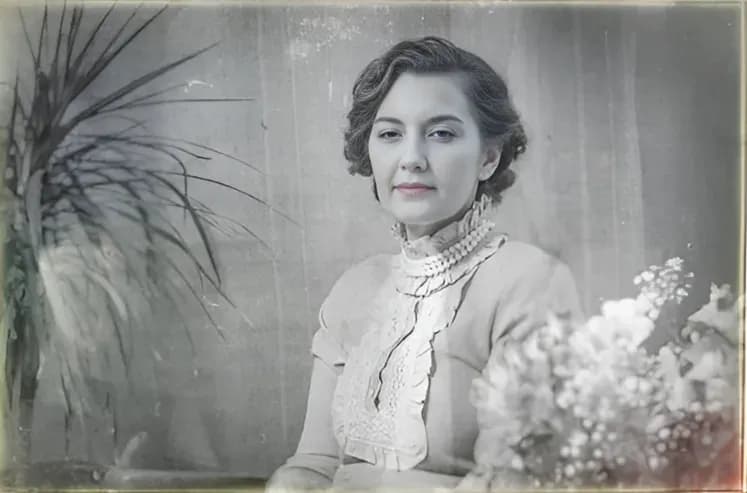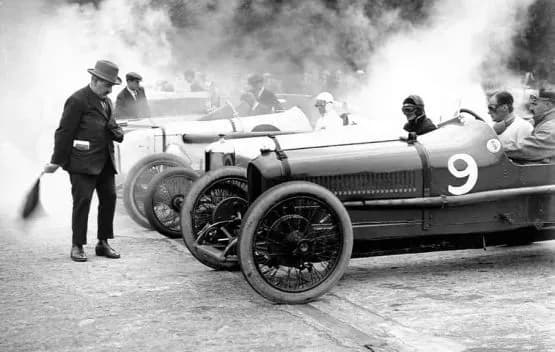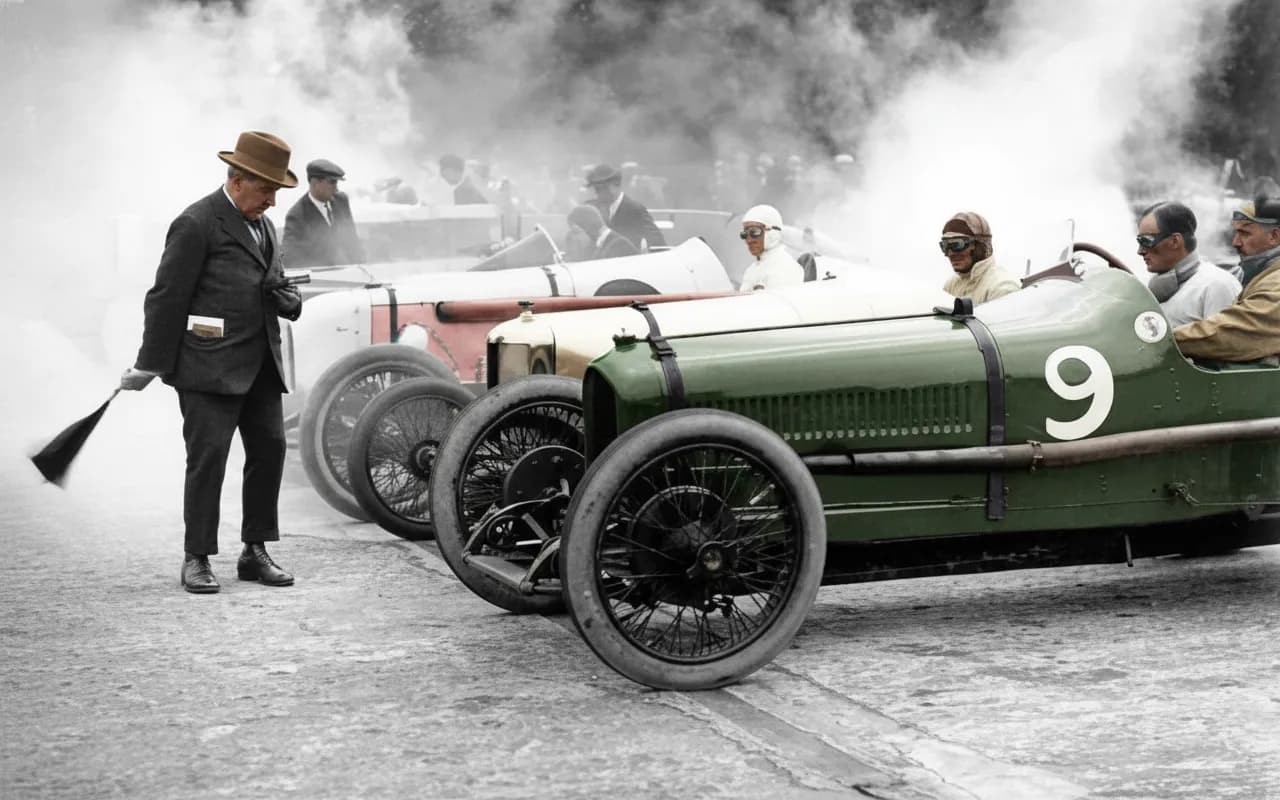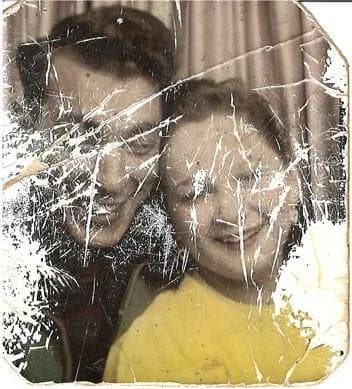
Why restore daguerreotype photos with AI?
Daguerreotypes are one-of-a-kind images on polished silver-plated copper. They cannot be reprinted from a negative because no negative exists. Over nearly two centuries, tarnish has obscured many of these irreplaceable images. AI restoration creates a clear digital version without any physical contact with the fragile original.
- Recover images from the 1840s-1860s without touching the original
- Reverse nearly 200 years of silver tarnish and oxidation digitally
- Create shareable digital copies of one-of-a-kind artifacts
- Reveal ancestor portraits for genealogy research and family trees

“My grandma cried when she saw her wedding photo restored. Absolutely incredible.”
Maria K.

“Uploaded a blurry photo from the 70s and got back a crystal clear image. Like magic.”
James T.

“Finally recovered old family photos I thought were lost forever. So easy to use.”
Sarah M.
How it works
3 simple steps.
AI Restoration
Recover images from the dawn of photography.
Daguerreotypes tarnish in distinctive patterns, including hazing, dark spots, and iridescent discoloration. Our AI recognizes these artifacts and digitally reverses them, revealing the sharp detail the polished silver plate originally captured.
- ✦Reverses silver tarnish and hazing
- ✦Removes iridescent oxidation patterns
- ✦Recovers sharp detail from polished plates
Easy to Use
Photograph through the case glass.
Never open a daguerreotype case yourself. Simply photograph the image through the protective glass, upload it, and let our AI handle the rest.
- ✦No need to open fragile cases
- ✦Works with photos taken through case glass
- ✦Results in seconds, not hours
For Collectors
See your earliest ancestors clearly.
Daguerreotypes are often the only images of pre-Civil War ancestors. Restoring them reveals faces and details that connect you to the very beginning of your family's photographic record.
- ✦Reveal faces obscured by 180 years of tarnish
- ✦Ideal for genealogy and museum collections
- ✦2 free restorations per account
In-depth guide
How to restore daguerreotype photos: step by step
Start by digitizing your daguerreotype safely. Photograph it through the case glass. Never open the case. Use indirect, diffused lighting to avoid harsh reflections on the mirror-like plate surface. Hold the daguerreotype at a slight angle so your camera and hands do not appear in the reflection. Take multiple photos at different angles, because the image shifts between positive and negative as you tilt it. Choose the photo where the positive image is clearest and reflections are least visible, then upload that one.
Go to restorephotosapp.com, click "Restore a photo," and upload your best digitized image. The AI analyzes the daguerreotype and removes tarnish automatically in under 30 seconds. There is no manual editing, no sliders to adjust, and no learning curve. You upload, the AI restores, and you download the result.
The AI specifically targets silver tarnish, which is the primary damage on daguerreotypes. This includes hazing, dark spots, and the iridescent blue-purple discoloration that typically forms around the plate edges. The AI treats tarnish as a layer to peel back digitally, recovering the sharp detail that the original polished silver plate still holds underneath. Faces obscured by nearly 200 years of oxidation become clear, recognizable portraits.
Not sure if you have a daguerreotype? Here is how to tell. A daguerreotype has a mirror-like surface. You can see your own reflection in the plate. The image shifts between positive and negative as you change the viewing angle. It is always on metal (silver-plated copper), and it is almost always housed in a small hinged case with a brass mat and cover glass. If the image is on glass with a dark backing and does not shift at different angles, you have an ambrotype instead, not a daguerreotype.
One critical rule: never open the case, and never attempt to clean the plate yourself. The sealed case has protected the daguerreotype for over 150 years by limiting the silver plate's exposure to air. Breaking that seal accelerates tarnish rapidly. Amateur cleaning methods like silver polish or chemical baths permanently destroy the image. There is no undoing that damage. AI restoration works on a digital copy of the daguerreotype, so the original plate is never touched or put at risk.
After restoration, download the full-resolution restored image. Print it alongside a modern family photo to show the connection across generations. Upload it to genealogy sites like Ancestry or FamilySearch to help other researchers identify shared ancestors. Share it at family reunions or with local history societies. A daguerreotype is likely the oldest photograph in your family, and restoring it digitally makes that ancestor visible to everyone.
Expert tips
Tips for restoring daguerreotype photos
Never open the case
The sealed case is the daguerreotype's primary protection. Opening it exposes the bare silver plate to air and rapidly accelerates tarnish. Photograph through the glass instead.
Use indirect, diffused lighting
The mirror-like silver surface reflects everything. Use soft, indirect light and angle the daguerreotype to find the view where the positive image is clearest and reflections are minimized.
Capture at multiple angles
Daguerreotypes look different at every angle. Take several photos and upload the one with the best visible detail. The AI can work with any angle that shows the image clearly.
Consult a conservator for physical restoration
If the plate itself needs cleaning or the case needs resealing, find a professional photograph conservator through the American Institute for Conservation (AIC). AI restoration handles the digital side beautifully, but physical intervention should be left to experts.
Check the case for inscriptions
Many daguerreotype cases have the sitter's name, date, or photographer's label written or pasted inside the lid or on the velvet pad. This information is invaluable for genealogy and can help date the image precisely.
Store the case in a stable, dry environment
Daguerreotypes survive best in conditions with low humidity (30 to 40% RH), stable temperature, and no exposure to direct sunlight. Avoid attics, basements, and areas near exterior walls.
Pricing
One-time pricing. No subscription. Credits never expire.
Starter
For 5 to 10 photos. A handful of favorites, done properly.
$0.70 / credit · 10 restorations
Get Starter- 10 AI credits included
- High-Resolution Output
- Credits Never Expire
- Animate Photos with Credits
30-Day Satisfaction Guarantee
Family
A shoebox of family photos: around 50.
$0.60 per photoSave 14% per photo
5 Starter packs would cost $34.95
- 50 AI credits included
- High-Resolution 1080P Output
- Credits Never Expire
- Animate Photos with Credits
30-Day Satisfaction Guarantee
Studio
A big collection: 100 photos, or dozens of animations.
$0.55 per photoSave 21% per photo
10 Starter packs would cost $69.90
- 100 AI credits included
- High-Resolution 1080P Output
- Credits Never Expire
- Animate Photos with Credits
30-Day Satisfaction Guarantee
Archive
The whole family archive: 250 photos.
$0.44 per photoSave 37% per photo
25 Starter packs would cost $174.75
- 250 AI credits included
- High-Resolution 1080P Output
- Credits Never Expire
- Animate Photos with Credits
30-Day Satisfaction Guarantee
Only have around 25 photos? Pro pack: 25 credits for $16.99
Prices don't include VAT.
FAQ
Frequently asked questions
What is a daguerreotype?
A daguerreotype is the earliest type of photograph, invented by Louis Daguerre in 1839. It is a one-of-a-kind image made on a polished, silver-plated copper plate, usually housed in a small hinged case. They were the dominant photo format from 1839 to the mid-1850s.
Can AI restore a heavily tarnished daguerreotype?
Yes. Our AI is trained to recognize and reverse the distinctive tarnish patterns found on daguerreotypes, including hazing, dark spots, and iridescent edge discoloration. Even heavily tarnished plates often contain recoverable image detail beneath the silver sulfide layer.
Do I need to open the case to digitize a daguerreotype?
No, and you should never open it. Photograph the daguerreotype through the case glass using indirect lighting at a slight angle to avoid reflections. Our AI works with photos taken through the glass.
How can I tell if a photo is a daguerreotype?
Hold the image at an angle. A daguerreotype has a mirror-like surface and the image shifts between positive and negative as you change the viewing angle. It is on metal (not glass or paper), usually housed in a small hinged case with a brass mat. If you can see your reflection in the plate, it is almost certainly a daguerreotype.
Why are daguerreotypes in cases?
The daguerreotype image is on bare polished silver, which tarnishes rapidly when exposed to air. The hinged case with cover glass and paper seal creates a microenvironment that limits air exposure and protects the fragile surface from fingerprints, dust, and physical damage. This system has preserved daguerreotypes for nearly 200 years.
What is the difference between a daguerreotype and an ambrotype?
A daguerreotype (1839 to 1855) is on polished silver-plated copper and has a mirror-like, shifting quality. An ambrotype (1854 to 1865) is on glass with a dark backing and does not shift. Ambrotypes are later, cheaper, and less detailed. Both are typically cased, but daguerreotypes are more fragile and valuable.
How much is a daguerreotype worth?
Common sixth-plate portraits of unidentified sitters sell for $20 to $75. Daguerreotypes of identified subjects, military personnel, occupational scenes, or outdoor views can be worth $500 to $5,000+. Extremely rare examples have sold for over $1 million. Condition, subject, and provenance determine value.
Can tarnished daguerreotypes be cleaned?
Physical cleaning of daguerreotypes is extremely risky and should only be done by professional photograph conservators. Amateur cleaning methods (silver polish, chemical baths) permanently destroy the image. AI restoration achieves excellent visual results without any risk to the original plate.
Is daguerreotype restoration free?
You get 2 free restorations, which is usually enough for most families since daguerreotypes are rare. Most people own only one or two. If you have a larger collection or are a museum digitizing multiple plates, credit packs start at $6.99 for 10 restorations.
Will the AI damage the original daguerreotype?
No. The AI works entirely on a digital photograph of the daguerreotype. The original plate is never touched. You download a new, digitally restored image file.
How is a daguerreotype different from a tintype?
A daguerreotype is on polished silver-plated copper and is mirror-like, while a tintype is on dark-lacquered iron. Daguerreotypes are older (1839 to 1850s), more fragile, and typically housed in cases. Tintypes are later (1856 to 1890s), cheaper, and more durable.
How long does daguerreotype restoration take?
Under 30 seconds in most cases. The AI detects and reverses the distinctive silver tarnish patterns, including hazing, iridescent discoloration, and dark veiling, without any manual input. Heavily tarnished plates with complex edge discoloration may take a few seconds longer.