
On this page
Quick verdict
The choice comes down to one question: does your photo look damaged, or does the file refuse to open? If the file itself is corrupted (a broken JPEG from a failing drive or SD card), EaseUS is a genuine specialist and RestorePhotosApp cannot help you at all. If the file opens fine but the photo looks bad (faded, scratched, blurry, black and white), RestorePhotosApp is purpose-built for exactly that, with one-time pricing instead of a $49.95-per-year desktop subscription.
Choose RestorePhotosApp
Best for visually restoring old family photos: scratches, fading, blur, and colorization.
Choose EaseUS Photo Restoration
Best for repairing corrupted photo files that will not open at all.

“My grandma cried when she saw her wedding photo restored. Absolutely incredible.”
Maria K.

“Uploaded a blurry photo from the 70s and got back a crystal clear image. Like magic.”
James T.

“Finally recovered old family photos I thought were lost forever. So easy to use.”
Sarah M.
See the difference on your own photos
No watermark · No subscription · From $6.99
Two different problems that sound the same
When people say their photo is "damaged," they can mean two completely different things, and the tool you need depends entirely on which one you mean. The first meaning is visual damage: a print from 1965 that has faded, cracked, or yellowed, or a scan that came out blurry. The file opens perfectly on your computer. It just looks bad. The second meaning is data damage: a JPEG that will not open, shows half an image, or throws an error because the underlying file was corrupted by a failing hard drive, a bad SD card, or an interrupted transfer.
EaseUS built its reputation on the second problem. The company behind it, CHENGDU Yiwo Tech, has been in the data-recovery business since 2004 and is one of the best-known names in that field. Its Fixo desktop suite repairs corrupted photos, videos, and documents, and its online old photo restoration tool at repair.easeus.com grew out of the same file-repair heritage. Fixing broken files is genuinely their specialty, and if that is your problem, they are a legitimate place to take it.
RestorePhotosApp solves the first problem and only the first problem. We do not repair corrupted files at all. What we do is take a photo that opens fine but looks damaged, old, or faded, and use Google Gemini AI models to remove scratches, repair tears, fix fading, sharpen blur, and colorize black and white images, delivered at 1080p from any browser. Knowing which problem you actually have is the single most useful thing this page can tell you, and it settles most of the comparison before pricing even enters the picture.
What EaseUS actually sells, and what it costs
EaseUS offers two overlapping photo products. The first is its free online old photo restoration tool, a web page that claims results in about ten seconds per image with no watermark. The catch is that the actual free usage limits are not published anywhere on the tool page, and neither is a photo retention or deletion policy, so you upload family photos without knowing how many you can process or how long they are kept. The second product is EaseUS Fixo, a desktop application for Windows XP through 11 and macOS 11 through 15, whose core job is repairing corrupted photo, video, and document files, with AI photo enhancement added on top.
Fixo is priced like professional recovery software, because that is what it is. On Windows it costs $49.95 per year, $69.95 for two years, or $99.95 for a lifetime license with upgrades, all for a single PC and excluding VAT. On Mac the same tiers are $69.95 per year, $99.95 lifetime, and $119.95 lifetime with upgrades. There is a 30-day money-back guarantee, which is fair. The free trial, however, only scans and previews: as is typical for EaseUS trials, reviewers report that actually repairing or saving a file requires purchasing a license first, so you commit money before you see a finished result.
It is also worth knowing the company context. EaseUS has a high company-level Trustpilot rating, around 4.7 to 4.8, which reflects a real, established business with millions of customers. But the recurring complaints in those reviews follow a pattern: subscriptions that auto-renew and are reportedly hard to cancel, upsells to tech-support packages costing as much as $299, and reviewers describing free capabilities being repackaged as paid subscriptions. None of this makes EaseUS a scam. It does mean you should read the checkout page carefully and set a calendar reminder for the renewal date if you buy.
The restoration quality question nobody can answer
Here is the strangest thing about researching EaseUS for photo restoration: there are almost no independent reviews of its restoration output quality. EaseUS the company is reviewed constantly, but nearly all of that coverage is about data recovery and partition management, the products it is actually famous for. Reviews of what its AI does to a faded 1970s family portrait, how it handles scratches, whether colorization looks natural, are close to nonexistent. That is not evidence the results are bad. It is evidence that photo restoration is a side feature that even EaseUS customers rarely exercise.
This matters because photo restoration quality is exactly the kind of thing you want to verify before paying. A file-repair tool succeeds or fails objectively: the file opens or it does not. Visual restoration is a matter of judgment. Does the restored face still look like your grandmother? Did the AI invent details that were never there? Did colorization produce skin tones you believe? These questions can only be answered by looking at output on your own photos, which is difficult when the desktop trial only previews and the online tool does not publish its limits.
RestorePhotosApp takes the opposite approach because restoration is our entire product, not a bolt-on. Every new account gets 2 free, full-quality, watermark-free restorations with no credit card, run through the same Google Gemini pipeline as paid credits, at the same 1080p output. The explicit point of that free tier is to let you judge restoration quality on your hardest photo before spending anything. Over 470,000 users have gone through exactly that test, and it is the fairest way to evaluate any restoration tool, ours included.
Skip the research — see the result on your own photo.
No watermark. No subscription. From $6.99.
Side by side
RestorePhotosApp vs EaseUS Photo Restoration
| Feature | RestorePhotosAppOur pick | EaseUS Photo Restoration |
|---|---|---|
| Built for | Visual restoration of old family photos | Corrupted file repair, restoration as a side feature |
| Pricing model | One-time credit packs from $6.99 | Yearly subscription or lifetime license per PC |
| Typical first-year cost | $6.99 one-time (Starter, 10 photos) | $49.95/yr Windows, $69.95/yr Mac (Fixo) |
| Free tier reality | 2 full restorations, no watermark, no card | Desktop trial previews only; online tool limits unpublished |
| Cost per photo (best plan) | $0.60 (Family, 50 photos for $29.99) | No per-photo pricing |
| Auto-renewal to cancel | None, credits never expire | Yes on yearly plans; reviewers report cancellation friction |
| Repairs corrupted files that will not open | No, not offered | Yes, their genuine specialty |
| Old-photo restoration (scratches, fading, colorize) | Core product, Google Gemini AI, 1080p output | Side feature with almost no independent quality reviews |
| Platform | Web, any browser, no install | Desktop install (Windows XP-11, macOS 11-15) plus web tool |
| Photo retention policy | Published: auto-deleted after 30 days | Not published on the online tool page |
Restoring old family photos in 2026
File repair vs photo restoration: getting the right tool for the job
How to tell if you need file repair or photo restoration
Run this one-minute test before choosing any tool. Open the photo on your computer or phone. If it will not open at all, opens as a gray or half-rendered image, or your operating system reports the file as unreadable, you have a corrupted file, and you need file-repair software like EaseUS Fixo. That is a data problem, and no amount of AI restoration can fix a file the computer cannot read. It is also, in fairness, the problem EaseUS has spent two decades getting good at.
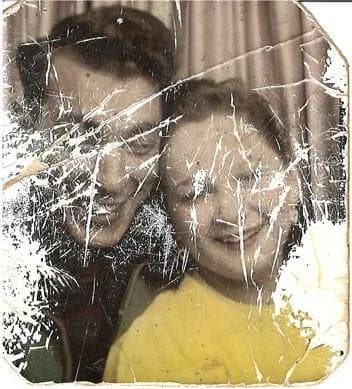
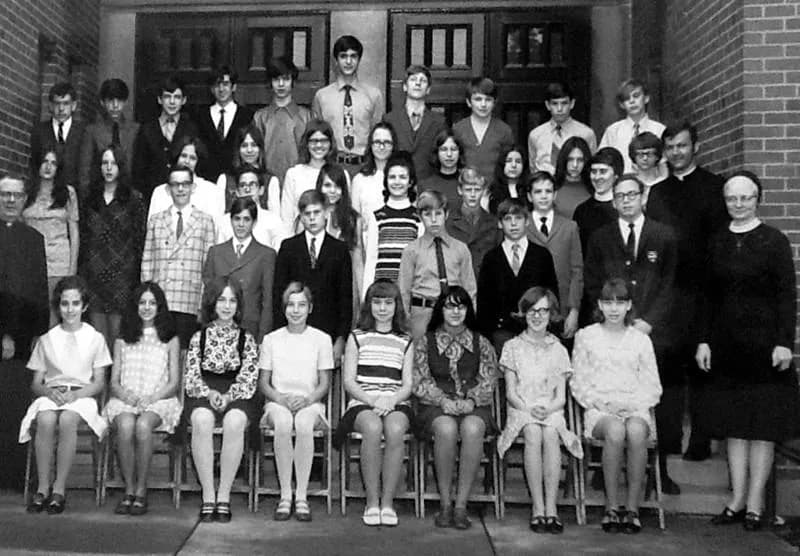
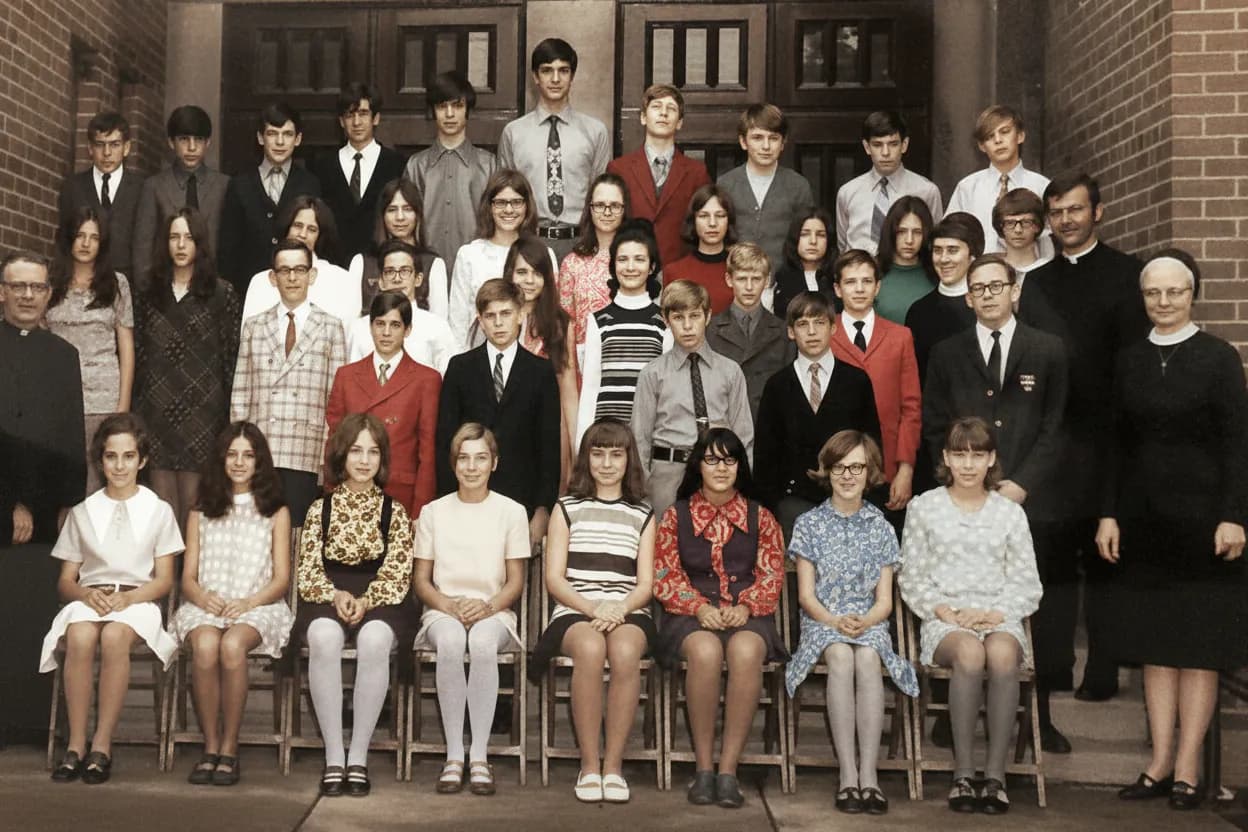
If the photo opens normally but looks bad, faded colors, scratches from decades in a shoebox, creases, blur, or a black and white image you wish were in color, you have a visual problem, not a data problem. That is what AI photo restoration does, and it is the entire job RestorePhotosApp was built for. Upload the scan in your browser, and the AI removes the damage, restores the fading, and can colorize the result at 1080p in seconds. Most people searching for old photo restoration have this second problem, which is why a dedicated restoration tool usually fits better than a file-repair suite.
Why one-time credits beat a yearly desktop license for photos
A yearly per-PC license makes sense for tools you use professionally and continuously, which is how data-recovery software is typically bought. Restoring a box of family photos is the opposite kind of project: it happens once, maybe twice, usually over a weekend. Paying $49.95 for a year of Windows software (or $69.95 on Mac) to do a weekend project means most of what you pay covers months of shelf time, and if the plan auto-renews, you are paying again next year for software you forgot you had.
One-time credit packs match the actual shape of the project. RestorePhotosApp starts at $6.99 for 10 restorations, and the Family plan covers 50 photos for $29.99, about 60 cents each, which handles a typical attic box. Credits never expire, so the photos you do not get to this year are still covered in three years, and there is no renewal to cancel because nothing renews. Both products offer a 30-day money-back guarantee, but only one of them can quietly charge you again twelve months later.
What to check before uploading family photos to any tool
Old family photos are often the most personal images a household owns, so it is reasonable to ask what happens to them after you upload. The two questions worth asking of any online restoration tool are simple: how long are my photos kept, and is that policy actually written down where I can read it? EaseUS's online restoration tool does not publish a retention or deletion policy on the tool page itself, which does not mean anything sinister, but it does mean you are uploading on trust.
RestorePhotosApp publishes its policy plainly: uploaded photos are automatically deleted from the servers after 30 days, long enough for you to re-download results, short enough that your family archive is not sitting in someone else's cloud indefinitely. Processing happens through Google Gemini AI models, results are watermark-free at every tier including the free one, and there is no account-level trick where free output is degraded to push you toward paying. For irreplaceable photos, a written deletion policy is a small thing that matters a lot.


See the same effect on your own photos.
No watermark. No subscription. From $6.99.
Comparison information is based on publicly available product details and may change. Last updated 2026. Read how we test photo restoration tools.
About EaseUS Photo Restoration
EaseUS is the consumer software brand of CHENGDU Yiwo Tech, a Chinese software company founded in 2004 and best known for data-recovery and partition-management tools. Its photo offering comes in two forms: a free online old photo restoration tool at repair.easeus.com, which claims roughly ten-second processing and watermark-free results, and EaseUS Fixo, a desktop suite for Windows and macOS whose core purpose is repairing corrupted photo, video, and document files, with AI photo enhancement included as an additional feature.
The company itself is well established, with a high Trustpilot rating around 4.7 to 4.8, though recurring reviewer complaints mention auto-renewing subscriptions that are hard to cancel and upsells to paid tech support. Fixo costs $49.95 per year on Windows ($69.95 per year on Mac), with lifetime licenses up to $119.95, and its free trial scans and previews but, as reviewers report is typical for EaseUS trials, requires purchase to actually repair files. Independent reviews of its photo restoration quality specifically are almost nonexistent, since file repair, not restoration, is what the product is known for.
Pros
- +Genuine specialist at repairing corrupted photo, video, and document files
- +Established company since 2004 with a strong data-recovery track record
- +Desktop app supports batch file repair on Windows and Mac
- +30-day money-back guarantee and lifetime license options
- +Online tool is fast (about 10 seconds per image) with no watermark
Cons
- −Photo restoration is a side feature, not the core product
- −Almost no independent reviews of restoration output quality
- −$49.95 per year per PC (Windows) is expensive for a one-time photo project
- −Desktop trial previews only; reviewers report repair requires purchase
- −Free online tool does not publish its usage limits or photo retention policy
- −Reviewers report auto-renewal cancellation friction and tech-support upsells
The alternative
Why people choose RestorePhotosApp over EaseUS
The people who land on this page usually have photos that look damaged, not files that will not open. For them, EaseUS means paying for a file-repair suite to use its side feature, on a yearly subscription, per PC, after a trial that only previews. RestorePhotosApp flips every one of those terms: restoration is the whole product, entry costs $6.99 once, it runs in any browser on any device, and you get 2 full free restorations before paying anything.
The economics compound over a real project. A Windows Fixo license is $49.95 for one year on one PC. For less money, the $29.99 Family pack restores 50 photos at about 60 cents each, works on every device you own, never expires, and never renews. And because RestorePhotosApp publishes a 30-day auto-deletion policy for uploads, you know exactly what happens to your family photos after the project is done.
Purpose-built for old photos
Scratches, tears, fading, blur, and black and white colorization are the entire product, powered by Google Gemini AI at 1080p, not a feature bolted onto a file-repair suite.
One-time $6.99 entry, no subscription
Credit packs from $6.99 for 10 photos instead of $49.95 per year per PC. Credits never expire and nothing auto-renews.
Try before paying, for real
2 free full-quality restorations with no watermark and no credit card, versus a desktop trial that previews but does not save repairs.
Published photo deletion policy
Uploads are automatically deleted after 30 days, and the policy is written down. The EaseUS online tool page does not publish one.
Works everywhere, no install
Any browser on any device, versus a desktop application licensed to a single PC. Restore from your laptop today and your phone tomorrow.
Join 470,000+ people restoring their family photos.
No watermark. No subscription. From $6.99.
In practice
A real-world example: the scanned album
Here is the situation that brings most people to this comparison. A family member has scanned two albums of old prints, maybe eighty photos spanning the 1950s through the 1980s. Every single file opens fine. The scans are technically perfect copies of imperfect originals: faded Kodachrome, a few prints with scratches from sliding around a drawer for decades, one important portrait with a crease across it, and a whole album of black and white photos the grandchildren have never seen in color.
Run this project through the EaseUS path and the mismatch shows quickly. Fixo's core repair engine has nothing to do here, because no file is corrupted. What you actually want is the AI enhancement side feature, purchased via a $49.95 yearly Windows license for one PC, evaluated through a trial that previews rather than saves, for a product category where independent output reviews barely exist. You would be paying data-recovery prices for a photo-restoration job.
Run the same project through RestorePhotosApp and the shape fits. Upload the two hardest scans free and judge the results at full quality. If they hold up, the $29.99 Family pack covers all eighty photos roughly twice over at about 60 cents each, from any browser in the house, with the originals auto-deleted from our servers after 30 days and no renewal arriving next year. The reverse scenario is just as clear: if those album scans had come off a failing SD card as unreadable files, EaseUS would be the right call and we would be useless. Match the tool to the problem.
The short answer
Which one should you choose?
- Your photos open fine but look faded, scratched, torn, or blurry
- You want black and white family photos colorized
- You have a one-time project and want to pay once, not yearly per PC
- You want to see full-quality results free before paying anything
- You want a published photo deletion policy for your uploads
- Your photo files are corrupted and will not open (failing drive, bad SD card)
- You need batch repair of broken JPEGs, RAW files, videos, or documents
- You prefer a desktop application over a web tool
- You already own a Fixo license for data-recovery work
Made your choice? Restore your first photos today.
No watermark. No subscription. From $6.99.
Bottom line
Final thoughts
This is one of the easier comparisons to call, because the two products barely overlap. EaseUS is a legitimate, twenty-year-old file-repair company whose photo restoration is a side feature with little independent review coverage and desktop-subscription pricing. RestorePhotosApp is a web tool that does nothing but visual restoration of old photos, priced for one-time projects. The honest summary is that each of us is poor at the other's job.
So decide based on the photo in front of you. If the file will not open, it is corrupted, and EaseUS Fixo is a specialist tool worth its price, especially for batch repair of many broken files. If the file opens but the photo looks old, damaged, or faded, that is our entire reason for existing. Upload your hardest photo, use the 2 free restorations, and judge the output yourself before spending a cent. Every purchase carries a 30-day money-back guarantee either way, but only one of these paths starts with seeing a finished result for free.
FAQ
Frequently asked questions
Is EaseUS photo restoration free?
Partly, with important caveats. EaseUS promotes its online old photo restoration tool at repair.easeus.com as free, claiming roughly ten-second processing and watermark-free results, but the actual free usage limits are not published on the tool page, so you cannot know in advance how many photos you can process. The desktop product, EaseUS Fixo, has a free trial that scans and previews, but as reviewers report is typical for EaseUS trials, actually repairing and saving files requires buying a license, which starts at $49.95 per year on Windows and $69.95 per year on Mac. RestorePhotosApp's free tier is defined precisely: every new account gets 2 full-quality restorations at 1080p with no watermark and no credit card, using the same Google Gemini AI pipeline as paid credits. After that, one-time packs start at $6.99 for 10 photos, and credits never expire. If knowing exactly what free means matters to you, that difference is the whole answer.
What is the difference between EaseUS Fixo and RestorePhotosApp?
They solve different problems. EaseUS Fixo is a desktop suite for Windows and macOS whose core job is repairing corrupted files: broken JPEGs, RAW files, videos, and documents that will not open, with AI photo enhancement included as a side feature. It is licensed per PC at $49.95 per year on Windows (lifetime options up to $119.95 on Mac). RestorePhotosApp is a web application dedicated entirely to visual restoration of old photos: removing scratches and tears, fixing fading and blur, and colorizing black and white images, powered by Google Gemini AI with 1080p output, sold as one-time credit packs from $6.99 that never expire. The practical test: if your photo file will not open, you need Fixo, and RestorePhotosApp cannot help. If the file opens but the photo looks damaged or old, RestorePhotosApp is purpose-built for it, and you can verify the quality with 2 free restorations before paying.
Can EaseUS fix corrupted photos?
Yes, and this is genuinely its specialty, so credit where it is due. EaseUS has been a data-recovery company since 2004, and repairing corrupted files is what Fixo was built for: JPEGs that will not open, half-rendered images from a failing hard drive, RAW files damaged by a bad SD card, and it can batch-process many broken files at once on the desktop. If that is your situation, EaseUS is a legitimate specialist, and RestorePhotosApp is honestly the wrong tool, because we do not repair corrupted files at all. The distinction to keep straight is corruption versus visual damage. Corruption means the computer cannot read the file. Visual damage means the file opens fine but the photo itself looks bad: faded, scratched, creased, or blurry. EaseUS fixes the first problem. RestorePhotosApp fixes the second, which is what most people with old family photos actually have. Open the photo: if it displays, your problem is visual, not corruption.
How much does EaseUS Fixo cost compared to RestorePhotosApp?
Fixo is priced as subscription desktop software. On Windows it costs $49.95 per year, $69.95 for two years, or $99.95 for a lifetime license with upgrades, all for a single PC and excluding VAT. On Mac the tiers are $69.95 per year, $99.95 lifetime, and $119.95 lifetime with upgrades. There is a 30-day money-back guarantee, but the yearly plans auto-renew, and reviewers report cancellation can involve friction. RestorePhotosApp uses one-time credit packs with no subscription: Starter is $6.99 for 10 photos, Pro is $16.99 for 25, Family is $29.99 for 50 (about $0.60 per photo), and Studio is $54.99 for 100. Credits never expire, nothing renews, purchases carry the same 30-day money-back guarantee, and the tool works on every device you own rather than one licensed PC. For a typical one-time family photo project, the entire job usually costs less than a single year of Fixo on Windows.
Is EaseUS legit and safe to use?
Yes, EaseUS is a legitimate company. It is the consumer brand of CHENGDU Yiwo Tech, founded in 2004, and one of the best-known names in data recovery, with a company-level Trustpilot rating around 4.7 to 4.8. That said, the recurring complaints in its reviews are worth knowing before you buy: subscriptions that auto-renew and are reportedly hard to cancel, upsells to tech-support packages costing as much as $299, and reviewers describing free capabilities being repackaged as paid tiers. None of that is unusual for consumer utility software, but it argues for reading the checkout page carefully and noting your renewal date. One further gap specific to photos: the online restoration tool does not publish a photo retention or deletion policy on its page, so you upload family photos without written terms on how long they are kept. RestorePhotosApp publishes its policy explicitly: uploads are automatically deleted after 30 days, and there is no subscription to cancel because nothing renews.
Which is better for restoring old family photos?
For visual restoration of old family photos specifically, RestorePhotosApp is the stronger fit, and the reasoning is structural rather than promotional. Photo restoration is EaseUS's side feature attached to a file-repair suite, and there are almost no independent reviews of its restoration output quality, because file repair is what its customers actually buy it for. Restoration is RestorePhotosApp's entire product: scratch and tear removal, fading and blur correction, and colorization, powered by Google Gemini AI with 1080p output, used by over 470,000 people. The evaluation path is also more honest to the buyer: 2 free full-quality restorations with no watermark and no credit card, versus a desktop trial that previews but requires a $49.95-per-year purchase to save results. The one clear exception: if your photo files are corrupted and will not open, EaseUS wins outright, because that is their specialty and we do not do file repair at all. Test us free on your hardest photo and judge the output yourself.