On this page
Quick verdict
This is not a comparison between two apps. Phowd is a marketplace of human retouchers who edit your photo by hand in Photoshop or Lightroom; RestorePhotosApp is AI that restores it automatically in seconds. For the hardest photos, where large areas are missing or you want artistic judgment and revisions, a skilled human can genuinely beat AI. For everything else, especially batches of family photos, AI at about $0.60 per photo is the rational choice over $2 or more per photo and a wait measured in hours or days.
Choose RestorePhotosApp
Best for restoring most old family photos instantly, privately, and at a fraction of the cost.
Choose Phowd
Best for the few hardest photos where you want a human artist, revisions, and a dialogue.

“My grandma cried when she saw her wedding photo restored. Absolutely incredible.”
Maria K.

“Uploaded a blurry photo from the 70s and got back a crystal clear image. Like magic.”
James T.

“Finally recovered old family photos I thought were lost forever. So easy to use.”
Sarah M.
See the difference on your own photos
No watermark · No subscription · From $6.99
Human retouching vs AI restoration: an honest framing
Phowd, founded in 2013 and based in Charlotte, North Carolina, is a web marketplace that claims a network of more than 67,000 human retouchers. You upload a RAW or JPG file, and either hire one retoucher privately at an agreed price or run an open contest with a reward, where multiple retouchers submit competing edits and you pick the winner. Your payment sits in escrow until you approve the result, there is a 100% money-back guarantee advertised, and a winning retoucher can join your team for future orders. It is a genuinely different model from every AI tool on the market, and comparing the two honestly means starting from that difference.
A skilled human retoucher working in Photoshop can do things AI still cannot do reliably. They can reconstruct a large missing area of a photo using judgment about what was probably there. They can repair a torn face in a way that honors how the person actually looked, asking you for reference photos. They can composite two damaged prints into one, and they can take feedback: "make the sky less blue," "that is not quite her smile." AI restoration works in a single automated pass. It is remarkably good at scratches, fading, blur, and colorization, but it does not take direction, and on the most severely damaged photos a human artist can genuinely produce a better result. This page will not pretend otherwise.
The real question is economic and practical. Human skill is expensive and slow by nature: Phowd's tier that includes "Restore old photo" starts at $2.00 per photo for a direct hire, or a $150 minimum reward per photo in contest mode, and a human workflow inherently takes hours or days rather than seconds. For the two or three most precious, most damaged photos in a family collection, that trade can be worth it. For the other hundred and ninety-seven photos in the box, it usually is not, and that is exactly the gap AI restoration was built to fill.
What Phowd actually costs, and when the math works
Phowd's published prices are minimums in a "pay what you want" system, so real costs can run higher. For a direct private hire, Basic Correction starts at $0.30 per photo, Standard at $1.00, and Advanced Retouching, the tier that explicitly includes restoring old photos, at $2.00 per photo. Contest mode, where dozens of retouchers compete for your reward, starts at $45 for Basic work, $90 for Standard, and $150 per photo for Advanced work including old photo restoration. There are no subscriptions, which is genuinely to Phowd's credit: like RestorePhotosApp, you pay per job rather than per month.
Run the numbers on a real project. A typical attic-box restoration involves somewhere between 40 and 200 photos. At Phowd's $2.00 minimum for old photo restoration, a 200-photo album starts at $400, before any retoucher quotes above the minimum, and the human workflow means the project stretches across weeks of uploading, waiting, reviewing, and approving. RestorePhotosApp's Family pack covers 50 photos for a one-time $29.99, about $0.60 each, and the Studio pack covers 100 for $54.99. The same 200-photo album costs roughly $26 in credits and is done in an afternoon, because each photo processes in seconds.
For a single museum-grade restoration where you want to sit with an artist through revisions, $2 or even $150 can be money well spent. For a family archive, the math points overwhelmingly one way. The honest answer, which we will come back to, is that many people should use both: AI for the bulk of the collection, and a human specialist for the handful of photos AI cannot fully save.
Turnaround, privacy, and what a marketplace model means for you
Phowd does not publish turnaround times, and a human workflow inherently takes hours or days: a retoucher has to accept the job, open your file, do the work by hand, and submit it for your review, and in contest mode you also wait for multiple submissions to come in before picking a winner. That rhythm is fine for a professional photographer batching wedding edits on a known schedule. It is a very different experience from uploading a scan and watching the restored version appear about thirty seconds later, which is what an automated AI pipeline delivers, at any hour, with no human in the loop.
The marketplace model also has a privacy dimension worth understanding before you upload a family photo. In an open Phowd contest, your photo is, by design, seen by many strangers, since that is how multiple retouchers can submit competing edits. You can avoid this by choosing a private direct order with a single retoucher, but even then a person you have never met is looking closely at your family's faces. That is not sinister, it is simply inherent to human retouching. RestorePhotosApp's processing is fully automated: no human ever views your photo, and uploads are deleted from the servers automatically after 30 days.
One more observation, offered as exactly that. For a company operating since 2013, Phowd has a very low independent review footprint; we could not find a Trustpilot profile for it. That does not mean the service is bad, and the escrow plus money-back guarantee mitigates the risk of a poor result. But it does mean you have less third-party evidence to go on than you might expect from a thirteen-year-old marketplace, which is worth weighing when you are about to trust it with an irreplaceable original scan.
Skip the research — see the result on your own photo.
No watermark. No subscription. From $6.99.
Side by side
RestorePhotosApp vs Phowd
| Feature | RestorePhotosAppOur pick | Phowd |
|---|---|---|
| Who does the work | AI (Google Gemini models), fully automated | Human Photoshop/Lightroom retouchers |
| Price per photo (old photo restoration) | About $0.60 on the Family plan | From $2.00 direct hire, $150 minimum per contest |
| Turnaround | Seconds per photo | Not published; human work takes hours to days |
| Revisions and dialogue with the editor | No, single automated pass (re-run anytime) | Yes, feedback and revisions with a human |
| Hardest damage (large missing areas, composites) | Limited, AI cannot recreate what is gone | A skilled human can reconstruct with judgment |
| Batch of 100+ photos | An afternoon, about $55–$110 in credits | $200+ at minimum rates, weeks of back-and-forth |
| Privacy of your photo | No human sees it, auto-deleted after 30 days | Seen by retoucher(s); contests expose it to many strangers |
| Upfront cost to try | 2 free restorations, no credit card | Paid from the first photo (escrow until approval) |
| Money-back guarantee | 30 days on all purchases | 100% money-back guarantee advertised |
| Availability | 24/7, instant, in any browser | Depends on retoucher availability and time zones |
Human hands vs AI models in 2026
When to hire a retoucher and when to let AI do it
What AI restoration handles as well as a human, instantly
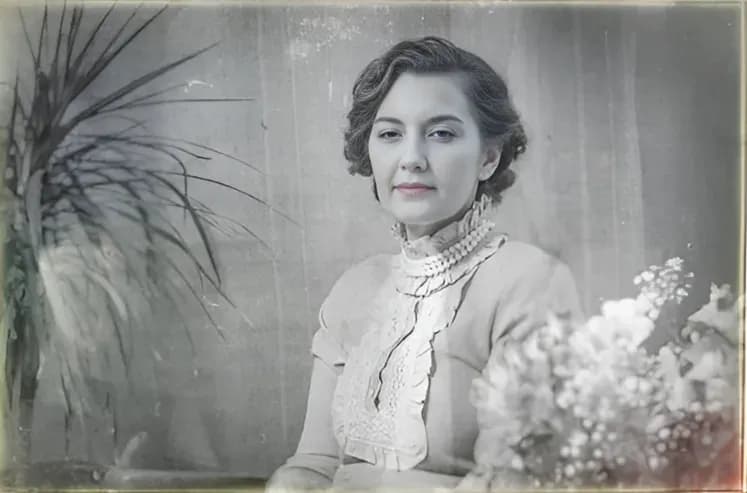
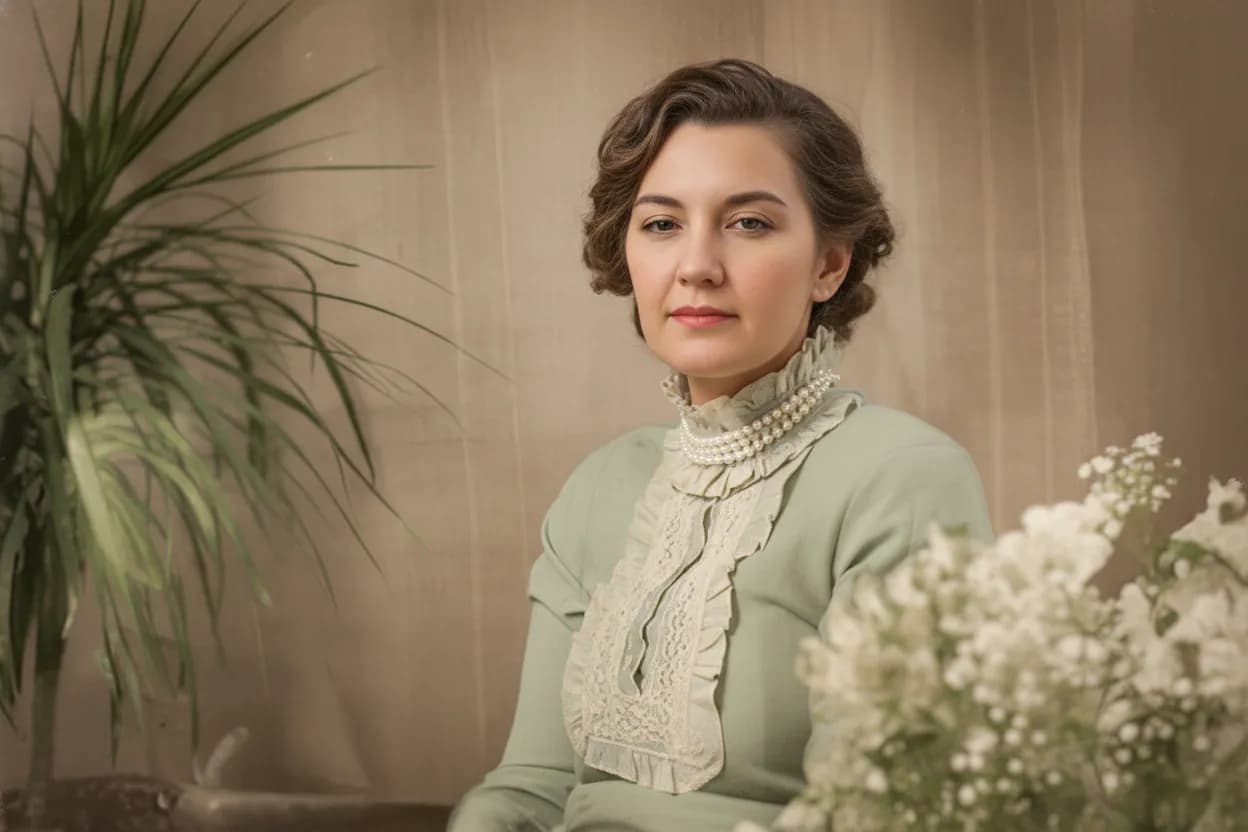
The overwhelming majority of damage in a real family photo collection falls into categories AI now handles extremely well: surface scratches, dust, creases, fading and color shift from aged paper, mild water damage, soft focus, and black and white photos that the family would love to see in color. On this class of damage, a modern AI restoration model produces results that most people cannot distinguish from careful human retouching, and it produces them in about thirty seconds instead of after a day of waiting for a stranger to open your file.
This matters because photo restoration projects are almost never about one photo. They are about a shoebox. Paying human rates for routine scratch removal on eighty photos means paying a skilled artist to do work a machine now does as well, which is why even professional retouchers increasingly run an AI pass first and reserve their hand skills for what the AI missed. You can adopt exactly the same workflow yourself, starting with the 2 free restorations every RestorePhotosApp account includes.
Where a human retoucher still earns their fee
Be clear-eyed about the other side. AI restores what is degraded; it cannot faithfully recreate what is entirely gone. If half of a face has been torn away, an AI model will generate a plausible face, but plausible is not the same as true, and for a photo of your great-grandmother, true is the entire point. A human retoucher can work from other photos of the same person, ask you questions, and rebuild the missing area with intent. The same goes for composite work, like merging two damaged prints, and for taste-driven professional jobs such as wedding or product retouching where the client wants a specific look and multiple revision rounds.
For those photos, a marketplace like Phowd is a reasonable place to find that human, with escrow protecting your payment until you approve the result. The practical strategy is triage: run everything through AI first at about $0.60 per photo, see what comes back, and send only the two or three photos that genuinely defeated the AI to a human specialist at $2 or more each. You spend a fraction of the money and get the best of both.
Why privacy and speed favor automation for family photos
Family photos are intimate. They show your relatives young, your parents' wedding, children who are now grandparents. In Phowd's contest mode, that photo is shown to many competing retouchers, strangers by definition, because that is how a contest works; a private direct order narrows it to one stranger, but a human still studies your family's faces closely for as long as the job takes. Automated AI processing removes the human from the loop entirely: the model restores the image, no person views it, and RestorePhotosApp deletes uploads from its servers automatically after 30 days.
Speed compounds the difference. Because AI results arrive in seconds, restoration becomes interactive: you scan, restore, look, rescan at a better angle if needed, and try colorization on a whim. A human marketplace cannot offer that loop; every iteration costs another job, another wait, another fee. For a finite family project you want to finish this weekend, in your own browser at midnight if that is when you have time, an always-on automated tool fits the way the work actually happens.
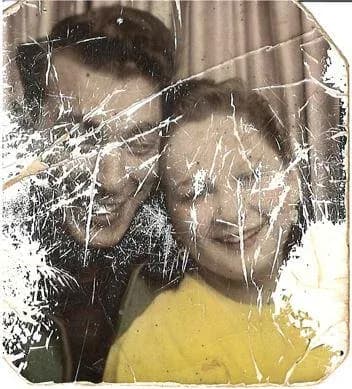
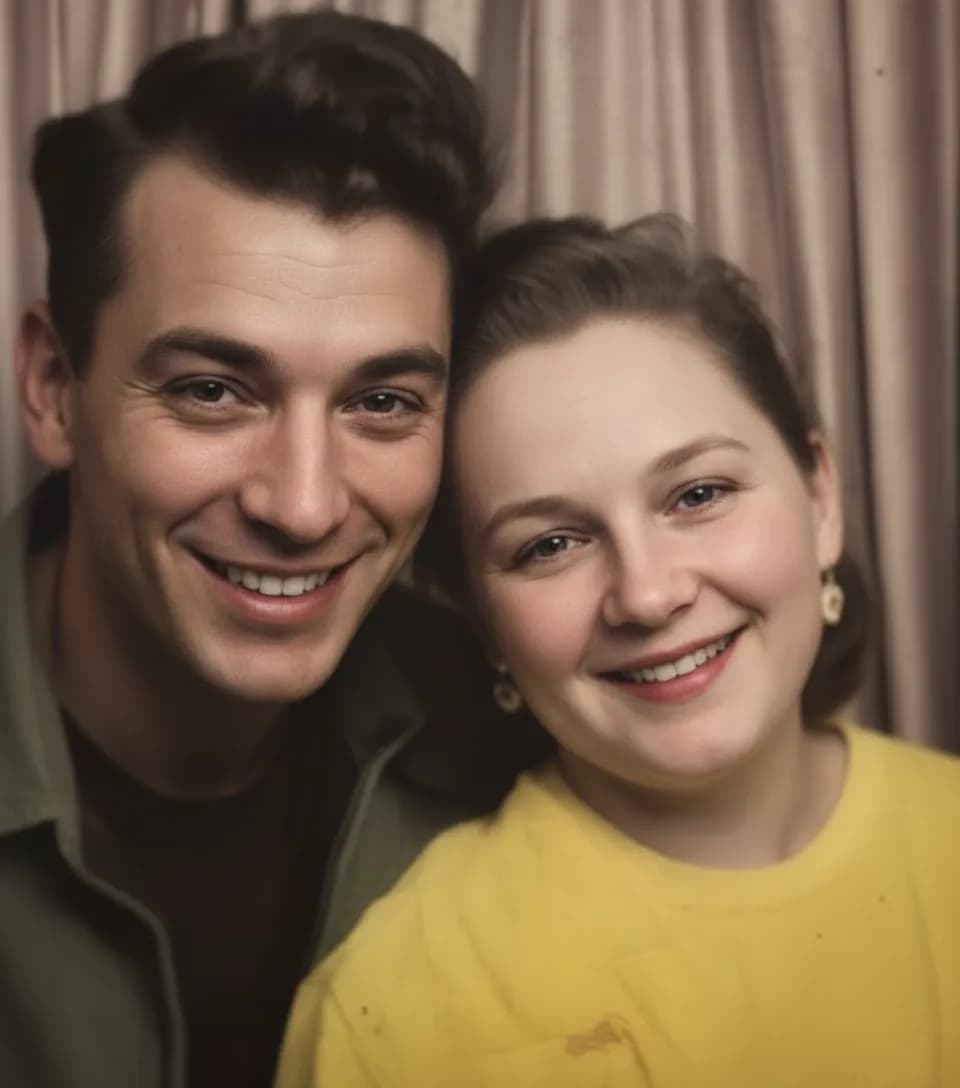
See the same effect on your own photos.
No watermark. No subscription. From $6.99.
Comparison information is based on publicly available product details and may change. Last updated 2026. Read how we test photo restoration tools.
About Phowd
Phowd is a web-based photo retouching marketplace founded in 2013, based in Charlotte, North Carolina, and led by founder and CEO Benjamin Novoselsky. The bootstrapped company claims a network of more than 67,000 retouchers who edit photos by hand in tools like Photoshop and Lightroom. You upload a RAW or JPG and either hire a single retoucher privately at an agreed price or run an open contest with a reward, where multiple retouchers submit competing versions and you choose the winner, who can then join your team for future orders.
Pricing is pay-what-you-want above published minimums: direct-hire Basic Correction from $0.30 per photo, Standard from $1.00, and Advanced Retouching, the tier that includes restoring old photos, from $2.00. Contests start at $45, $90, and $150 per photo respectively. Payment is held in escrow until you approve the work, and a 100% money-back guarantee is advertised. There are no subscriptions. Phowd does not publish turnaround times, and its independent review footprint is notably small for a company of its age.
Pros
- +Real human artists with judgment AI does not have
- +Revisions and a dialogue: you can give feedback and get changes
- +Can reconstruct large missing areas and do composite work
- +Escrow payment and an advertised 100% money-back guarantee
- +Contest mode lets you pick from multiple competing edits
- +No subscription, pay per job
Cons
- −Old photo restoration starts at $2.00 per photo, or $150 minimum per contest
- −Turnaround is not published; human work inherently takes hours to days
- −Open contests expose your photo to many strangers
- −Impractical cost and pace for batches of dozens or hundreds of photos
- −Very small independent review footprint for a company founded in 2013
- −No free tier to test quality before paying
The alternative
Why people choose RestorePhotosApp over Phowd
The people comparing these two services usually have a box of old family photos, not a professional retouching contract. For that project, the deciding factors are cost, speed, and privacy, and all three point the same way. Restoring a photo on RestorePhotosApp costs about $0.60 on the Family plan against Phowd's $2.00 minimum for the same category of work, results arrive in seconds instead of an unstated number of hours or days, and no human being ever looks at your photo.
There is also the matter of trying before buying. Phowd has no free tier; the first photo costs real money, even with escrow protecting the payment. RestorePhotosApp gives every account 2 free full-quality restorations with no credit card, so you can put your hardest photo through the AI and judge the result before spending anything, backed by a 30-day money-back guarantee if you do buy credits.
Seconds, not days
AI processing returns a restored 1080p photo in seconds. A human marketplace inherently takes hours or days per job, and Phowd does not publish turnaround times at all.
About $0.60 per photo
The Family pack is a one-time $29.99 for 50 photos. Phowd's old photo restoration tier starts at $2.00 per photo direct, or a $150 minimum reward in contest mode.
No human sees your photo
Processing is fully automated and uploads are auto-deleted after 30 days. On a marketplace, at least one stranger, and in contests many, must view your family photos.
Try it free first
2 free restorations on signup, no credit card, no watermark. Phowd has no free tier; testing a retoucher means paying for a real job.
Built for batches
A 200-photo album costs about $26 in credits and takes an afternoon. The same batch at human rates starts around $400 and stretches across weeks.
Join 470,000+ people restoring their family photos.
No watermark. No subscription. From $6.99.
In practice
A real-world example: the 200-photo family album
Here is the scenario that decides this comparison for most people. A family digitizes a complete album: 200 scans spanning sixty years. Most photos have routine aging: fading, small scratches, color casts, some blur. A handful are in real trouble: one has a torn corner cutting into a face, another is water-stained across a group portrait. The family wants all of it restored, and they want the three or four worst photos treated with special care.
Sending all 200 to human retouchers means at least $400 at Phowd's $2.00 minimum, likely more once retouchers quote above it, plus weeks of uploading jobs, waiting for strangers across time zones, reviewing submissions, and approving payments one by one. Sending all 200 through RestorePhotosApp costs about $26 using Family-plan credits and finishes in an afternoon, with each result visible seconds after upload, so the family can immediately see which photos came back perfect and which few still need help.
The smart ending to this story uses both services. After the AI pass, perhaps 195 photos are done, and the two or three that genuinely defeated the AI, the torn face above all, go to a human specialist, on Phowd or elsewhere, with the family now spending $2 to $150 per photo on exactly the photos that deserve it. AI restoration and human retouching are not really enemies; the AI handles the volume so the humans can be reserved for the photos that need human judgment. Total cost: well under $100 instead of $400-plus, and most of the album is on the family group chat the same day.
The short answer
Which one should you choose?
- You have dozens or hundreds of family photos to restore, not one or two
- You want results in seconds, not an unstated wait of hours or days
- You want to keep costs around $0.60 per photo instead of $2 or more
- You do not want strangers viewing your family photos
- You want to test quality free before paying anything
- Your photo has large missing areas or a torn face needing human reconstruction
- You want revisions and a dialogue with a human editor
- You need composite or judgment-heavy artistic work AI cannot direct
- You are a professional outsourcing wedding or product post-production
- You are willing to pay $2 to $150 per photo for hand-crafted work
Made your choice? Restore your first photos today.
No watermark. No subscription. From $6.99.
Bottom line
Final thoughts
Phowd and RestorePhotosApp sit at opposite ends of the same craft. One sells human skill by the job, with the judgment, dialogue, and revision rounds only a person can offer, at prices and timescales that reflect what human skill costs. The other sells automation: the same category of restoration for about $0.60 per photo, delivered in seconds, in private, at any hour. Neither is pretending to be the other, and on the very hardest photos a skilled human can still beat the AI. That is worth saying plainly.
For the project most readers of this page actually have, a finite collection of aging family photos, the practical answer is to let AI do the heavy lifting first. Start with the 2 free restorations, put your most damaged photo through, and see what comes back before you spend anything. If the AI nails it, the rest of the box costs pocket change and an afternoon. If a few photos defeat it, you will know exactly which ones are worth a human retoucher's fee, and you will have spent a fraction of what sending everything to humans would have cost.
FAQ
Frequently asked questions
How much does Phowd cost?
Phowd uses a pay-what-you-want model with published minimums, so the listed prices are floors rather than fixed rates. For hiring a single retoucher directly, Basic Correction starts at $0.30 per photo, Standard at $1.00, and Advanced Retouching, the tier that explicitly includes restoring old photos, at $2.00 per photo. Contest mode, where multiple retouchers submit competing edits for a reward and you pick a winner, starts at $45 for Basic, $90 for Standard, and $150 per photo for Advanced work including old photo restoration. Payment sits in escrow until you approve the result, a 100% money-back guarantee is advertised, and there are no subscriptions. For comparison, RestorePhotosApp charges one-time credit packs: $6.99 for 10 photos, $16.99 for 25, $29.99 for 50 (about $0.60 each), or $54.99 for 100, with 2 free restorations to start and credits that never expire. For batch projects the gap is roughly fifteen-fold per photo.
Is human photo restoration better than AI?
On the hardest photos, honestly, yes, it can be. A skilled human retoucher can reconstruct large missing areas using judgment about what was probably there, repair a torn face while working from reference photos of the same person, composite two damaged prints into one, and take your feedback through revision rounds. AI restoration is a single automated pass: it excels at scratches, fading, creases, blur, and colorization, which covers the overwhelming majority of real-world damage, but it cannot take direction and it cannot faithfully recreate content that is entirely gone; it can only generate something plausible. The practical answer for most families is not either-or but sequencing: run everything through AI first at about $0.60 per photo, in seconds, and see what comes back. Typically nearly all photos are done at that point. Send the two or three that genuinely defeated the AI to a human specialist at $2 or more each. You get human quality where it matters and machine economics everywhere else.
How long does Phowd take?
Phowd does not publish turnaround times, and a human workflow inherently takes hours or days rather than seconds: a retoucher has to accept your job, open the file, do the editing by hand in Photoshop or Lightroom, and submit the result for your review. In contest mode there is an additional wait while multiple retouchers prepare and submit competing versions before you can even compare them and pick a winner, and retouchers work across different time zones on their own schedules. None of that is a criticism; it is simply what buying human labor looks like, and for a professional photographer batching wedding edits on a planned timeline it can be perfectly fine. RestorePhotosApp works on the opposite clock: processing is automated through Google Gemini AI models, each photo returns at 1080p in seconds, and the service is available 24/7 in any browser. A 200-photo album that would stretch across weeks of marketplace back-and-forth finishes in a single afternoon.
Is Phowd private? Who sees my photos?
It depends on which Phowd mode you use, and the difference matters for family photos. In an open contest, your photo is by design shown to many retouchers, strangers to you, because that is how multiple people can submit competing edits for the reward. If you choose a private direct order instead, only the single retoucher you hire sees it, but a person you have never met still studies the image closely for as long as the job takes. That is inherent to human retouching, not a flaw in Phowd specifically. RestorePhotosApp removes humans from the loop entirely: restoration is performed by AI models with no human review, and uploaded photos are deleted from the servers automatically after 30 days. If you are restoring photos of your children, your parents' wedding, or relatives who have passed away, and you would rather no stranger look at them at all, fully automated processing is the more private path by construction.
Is RestorePhotosApp a free Phowd alternative?
You can try it free, and that alone is a structural difference: every RestorePhotosApp account gets 2 full-quality restorations with no watermark and no credit card required, processed through the same Google Gemini AI pipeline as paid credits and returned at 1080p in seconds. Phowd has no free tier; testing a retoucher means funding a real job, though escrow does hold your payment until you approve the work. RestorePhotosApp is not unlimited-free either: after the trial, one-time credit packs start at $6.99 for 10 photos, with the Family pack at $29.99 for 50 (about $0.60 per photo) and Studio at $54.99 for 100. Credits never expire, there is no subscription, and every purchase carries a 30-day money-back guarantee. The sensible approach costs nothing: upload your hardest photo, spend one free credit, and judge the result against what you would pay a human $2 or more to produce.
Can I use both Phowd and RestorePhotosApp together?
Yes, and for large restoration projects this is genuinely the smartest workflow, because the two services complement each other rather than compete. Start with the AI pass: run the entire collection through RestorePhotosApp at about $0.60 per photo, with each result back in seconds. For a typical family archive, the AI fully handles the scratches, fading, creases, color casts, blur, and colorization that make up nearly all real damage. Then triage what remains. The few photos with large missing areas, torn faces, or composite needs, the ones where you looked at the AI result and thought "close, but not her", are exactly the photos worth a human retoucher's judgment and revision rounds, on Phowd or elsewhere, at $2 to $150 each. A 200-photo album handled this way costs roughly $26 in AI credits plus human fees on only two or three photos, instead of $400-plus for humans on everything, and most of the album is finished the same afternoon.